Beyond the Camera Body: A Simple Guide to Choosing the Right Lens
- superiorcctvoffpag
- Feb 23
- 4 min read

When attempting to take professional photographs or building a secure home, most of us place our initial focus on the camera itself (Is it 4K?), including whether it has a Wi-Fi option. However, in professional photography, the most important part of the camera that actually creates the image is the lens.
The lens determines the field of view of the camera. It also determines how sharp (high resolution) the photo will be, as well as what types of light can be captured.
To understand how to properly choose what type of lens to use in a home security situation or in a highly automated manufacturing setting, it would be beneficial to understand the differences between a standard fixed lens, a wide angle fisheye lens, and the new state-of-the-art single element SWIR lens.
The Workhorse Standard - Zoom Lens
Zoom lenses offer greater versatility when taking photographs because they enable you to change how far away or close up subjects appear (i.e., change the "zooming in and out").
Although many photographers love to use fixed focal length lenses, they do not have the ability to do so with adjusting from wide-angle (e.g. 18mm) through telephoto (e.g. 200 mm). Therefore, it may be worth trying a zoom lens for the first time in order to determine if you are happy or not with your resulting images. The main reason I recommend using a zoom lens for beginner photographers is that they allow for a wide range of use, ranging from a large field of view to a narrow field view. As your skills improve, the performance of your zoom lens will diminish.

A zoom lens typically produces images with distortion and aberrations (i.e. optical imperfections present in the image), but it also creates images that look crisp and clear compared to fixed focal length lenses. In addition, because zoom lenses don't have many moving parts to create the zoom effect, their lenses typically contain higher quality glass than fixed focal length lenses. For this reason alone, zoom lenses are very beneficial to photographers who want to produce stunning photographs with minimal equipment investment. If you're looking for a way to take great photos with an affordable lens, a zoom lens is perhaps the best option.
A fisheye lens can show you more than just the ground behind you; it can provide a full view of everything that's happening in the surrounding area. Fisheye lenses are used to capture wide-angle scenes and provide a unique perspective on those scenes. Because of their ability to record a 180-degree field of view, fisheye lenses are particularly useful in public spaces like warehouses, parking lots, and retail stores.
Furthermore, although fisheyes originally produced distorted images, the advent of digital editing has allowed photographers to digitally "dewarp" the images taken with fisheyes. With this newfound technology, using one fisheye instead of multiple cameras to cover the corners of a room has become an ideal way to eliminate blind spots and capture an entire panoramic scene. By using a fisheye as your only panoramic camera solution, you will be able to efficiently capture an entire large area in one shot.
Super Vision by Using a Swirl Fixed Focal Length Lens
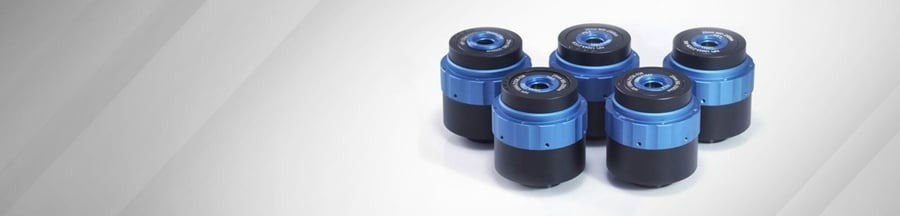
The first step into the world of advanced specialty industrial technologies starts now. Sometimes you cannot see what you want to see with visible light. Then think of times when you would like to look through fog or smoke. Or could you inspect the quality of the fruit by inspecting the bruising under the skin? SWIR Fixed Focal Length Lens will solve that issue.
SWIR means short-wave infrared. Unlike thermal imaging that detects heat, SWIR cameras actually capture reflected infrared energy, which is not visible to the human eye. By combining a special camera with a Swirl Fixed Focal Length Lens, you effectively have "super vision."
These lenses are not used much for home surveillance; instead, they are used as superheros in the industrial arena. SWIR lenses can be used to look through plastic containers to find out how much liquid is inside or they can look through clouds to do historical law enforcement, as well as perform inspections on silicon wafers during electronic manufacturing. Since SWIR energy behaves differently than visible light, they use a special coating and include precision engineering for focusing the invisible energy point source of light so that you can obtain high contrast pictures in total darkness or gray fog where the regular lens could not see anything other than dark and grey fog.
Summary
Selecting the appropriate apparatus should not cause complications.
If you require an accurate image at a fixed distance, then use a conventional lens with a fixed focal length.
If you want to attempt to prevent having blind spot problems while you're trying to cover an enormous ground area, then you want to use a CCTV fisheye lenses.
If you require assistance observing something that may have been obscured (i.e., smoke, fog) or inspecting items (i.e., in a factory), then you will require the newest technology available (i.e., swirl fixed focal lens).
When you select and utilize an appropriate lens for your needs, you will ensure that your camera establishment creates the ideal picture to obtain the information required.
Read more: click


Comments