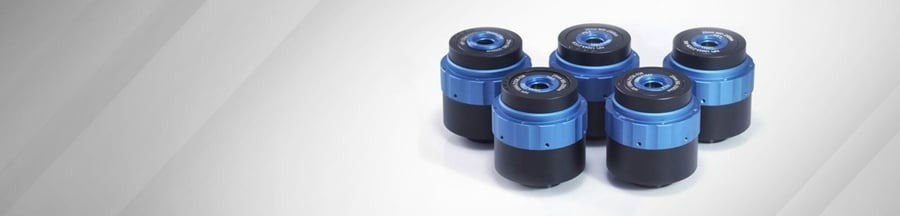
C Mount Telecentric Lens for Consistent Optical Performance
- superiorcctvoffpag
- Jan 27
- 4 min read

In modern imaging systems, accuracy is everything. Whether it is machine vision, industrial inspection, or precise measurement, even a small optical error can affect final results. This is where a C Mount Telecentric Lens becomes an essential tool. Designed to deliver consistent magnification and distortion-free images, this lens type plays a major role in applications where precision matters more than visual appeal.
A telecentric lens works differently from standard lenses. In regular lenses, objects closer to the camera appear larger, while objects farther away appear smaller. This perspective effect is useful in photography but creates problems in measurement-based systems. A C Mount Telecentric Lens removes this issue by allowing only parallel light rays to reach the sensor. As a result, the size of the object remains the same regardless of its distance from the lens, within the working range.
Understanding the C Mount Design
The term “C mount” refers to a standardized lens mount with a thread diameter of 1 inch and a flange focal distance of 17.526 mm. This mount is widely used in industrial cameras, machine vision systems, and scientific imaging devices. Because of its popularity, a C Mount Telecentric Lens can easily integrate with many cameras without the need for adapters or special housing.
The C mount design also supports a wide range of sensor sizes. This makes it flexible for different system requirements, from small inspection setups to larger automated production lines. Engineers prefer this mount because it simplifies system design and ensures compatibility across devices.
Why Telecentric Optics Matter
The biggest advantage of telecentric optics is consistent magnification. In quality control and inspection, parts are often measured using images. If magnification changes due to object position, measurements become unreliable. A C Mount Telecentric Lens solves this by keeping magnification constant, even when the object moves slightly forward or backward.
Another key benefit is the reduction of perspective error. Straight edges stay straight, and circular objects remain circular. This makes edge detection, dimensional measurement, and pattern recognition much more accurate. For industries that rely on automation, such as electronics, automotive, and medical manufacturing, this level of accuracy is critical.
Applications in Machine Vision
Machine vision systems depend heavily on accurate and repeatable imaging. A C Mount Telecentric Lens is widely used in tasks such as object measurement, defect detection, alignment checking, and barcode reading. Because the lens produces uniform images, software algorithms can process data more reliably.
In automated inspection lines, products move quickly and may not always stay in the exact same position. Telecentric lenses help overcome this challenge by ensuring that small variations in object placement do not affect image size. This leads to fewer false rejections and improved production efficiency.
Use in Industrial Inspection
Industrial inspection often involves checking small components with tight tolerances. For example, printed circuit boards, connectors, and mechanical parts require precise measurements. A C Mount Telecentric Lens allows inspectors to capture images where dimensions match real-world values closely.
These lenses are also useful in backlit inspection. When combined with proper lighting, they create sharp silhouettes with clear edges. This makes it easier to detect cracks, holes, and shape defects. The result is faster inspection and higher confidence in quality control decisions.
Optical Performance and Image Quality
Consistent optical performance is the core strength of a telecentric lens. These lenses are carefully designed with multiple optical elements to control light paths. This reduces distortion, minimizes image blur, and improves contrast across the field of view.
A high-quality C Mount Telecentric Lens provides uniform brightness from center to edge. This even illumination is important for image analysis software, which relies on stable light levels. Better image quality also means less need for post-processing, saving time and system resources.
Choosing the Right Telecentric Lens
Selecting the right lens depends on several factors. Field of view, working distance, sensor size, and required resolution all play a role. A C Mount Telecentric Lens must match the camera sensor to avoid vignetting and ensure full image coverage.
Working distance is another important factor. Telecentric lenses are designed for specific distance ranges. Choosing the correct working distance ensures optimal performance and accurate measurements. It is also important to consider lighting compatibility, as proper illumination enhances the lens’s benefits.
Benefits for Automation Systems
Automation systems rely on speed, accuracy, and reliability. A C Mount Telecentric Lens supports all three. By reducing errors caused by perspective and magnification changes, it improves system stability. This leads to consistent results over long production runs.
Maintenance is also easier. Once the lens is set up and calibrated, it requires minimal adjustment. This reduces downtime and helps maintain productivity. Over time, the improved accuracy can lead to cost savings by reducing waste and rework.
Role in Research and Scientific Imaging
Beyond industrial use, telecentric lenses are valuable in research and scientific imaging. In laboratories, precise measurements are often required for experiments and analysis. A C Mount Telecentric Lens provides repeatable imaging conditions, which is essential for reliable data collection.
In fields such as materials science and biology, accurate imaging supports better observation and documentation. Researchers can trust that the image dimensions reflect actual object sizes, improving the quality of their work.
Long-Term Value and Reliability
Although telecentric lenses may cost more than standard lenses, their long-term value is clear. The accuracy, consistency, and reduced error rates they offer can outweigh the initial investment. For businesses focused on quality and efficiency, a C Mount Telecentric Lens is a smart choice.
Durability is another advantage. These lenses are built for industrial environments and can handle continuous operation. With proper care, they deliver stable performance over many years.
Conclusion
A C Mount Telecentric Lens is a powerful optical solution for applications that demand consistent and accurate imaging. By eliminating perspective distortion and maintaining constant magnification, it ensures reliable measurements and high-quality results. From machine vision and industrial inspection to research and automation, this lens type supports precision at every level. For anyone seeking dependable optical performance, investing in a telecentric lens with a C mount design is a practical and future-ready decision.


Comments