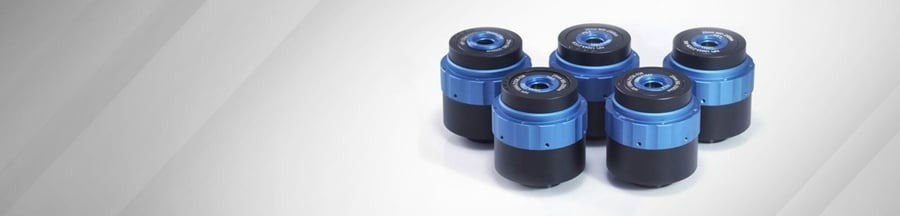
Swir Fixed Focal Length Lens for Scientific Camera Solutions
- superiorcctvoffpag
- Jan 9
- 4 min read

In modern scientific research and industrial applications, having accurate imaging is crucial. Whether you are monitoring chemical reactions, inspecting microelectronics, or capturing high-resolution images in research laboratories, the quality of your camera lens can make a significant difference. One of the most reliable choices for these applications is the Swir Fixed Focal Length Lens. This lens type has become essential in scientific camera solutions due to its precision, stability, and ability to capture detailed images with minimal distortion.
Understanding SWIR and Its Advantages
SWIR, or Short-Wave Infrared, refers to a specific part of the light spectrum that ranges from roughly 0.9 to 1.7 micrometers. Unlike visible light, SWIR can penetrate certain materials like plastics, silicon, and even water vapor to provide unique imaging perspectives. This ability allows scientists and engineers to see details that are otherwise invisible with standard cameras.
Using a Swir Fixed Focal Length Lens in these cameras ensures that every captured image is sharp and accurate. Unlike variable focal length lenses that can introduce inconsistencies, a fixed focal length lens maintains consistent optical performance across all imaging tasks. This makes it a preferred choice for precision-driven applications in laboratories and industrial inspections.
Key Features of Swir Fixed Focal Length Lens
Several features make Swir Fixed Focal Length Lens highly suitable for scientific camera solutions:
High Resolution: The lens provides sharp imaging at a micro-level, which is critical for scientific research and quality control processes.
Stable Performance: A fixed focal length design reduces mechanical complexity and minimizes optical distortions.
Durable Construction: Many SWIR lenses are built to withstand industrial conditions, including temperature fluctuations and vibration.
Enhanced Light Sensitivity: These lenses efficiently capture infrared light, making them ideal for low-light environments.
Precise Imaging: Ideal for measuring, analyzing, and documenting intricate details in experiments or manufacturing lines.
Because of these features, SWIR lenses are now widely used in applications ranging from pharmaceuticals to electronics, agriculture, and even food safety.
Applications in Scientific Camera Solutions
1. Industrial Inspection
In electronics manufacturing, defects in microchips or printed circuit boards can be invisible under standard light. SWIR imaging with a Swir Fixed Focal Length Lens allows engineers to see beneath surface layers to detect imperfections, cracks, or misalignments. This capability ensures high-quality standards are maintained without compromising production speed.
2. Pharmaceutical Research
Pharmaceutical companies use SWIR lenses to study drug tablets, capsules, and chemical reactions. These lenses allow precise imaging of chemical compositions and material properties, helping scientists ensure quality and consistency in drug production. A fixed focal length ensures repeatable measurements, which is essential in research environments.
3. Agricultural Monitoring
SWIR imaging has also found applications in agriculture. Scientists and agronomists can analyze plant health, soil composition, and moisture content with greater accuracy. A Swir Fixed Focal Length Lens enables detailed imaging of crops, detecting early signs of stress or disease, which helps improve yield and reduce losses.
4. Food Safety and Quality Control
Food processing industries benefit from SWIR imaging to detect foreign objects, contamination, or inconsistencies in food products. With a fixed focal length lens, cameras can capture detailed images of products on production lines, ensuring quality and safety standards are met efficiently.
Why Fixed Focal Length Matters
One might wonder why a fixed focal length lens is preferred over a zoom lens in scientific applications. The main reason is precision. A fixed focal length lens has a simpler optical design, which reduces distortions, chromatic aberrations, and other image quality issues. This ensures that measurements taken from images are accurate and repeatable—an essential factor in research and industrial applications.
Additionally, fixed focal length lenses generally have a larger aperture compared to zoom lenses. This allows more light to enter the camera sensor, improving low-light performance and capturing sharper images in conditions where illumination is limited.
Choosing the Right Swir Fixed Focal Length Lens
When selecting a Swir Fixed Focal Length Lens for scientific camera solutions, there are several factors to consider:
Focal Length: Choose based on the distance from the subject and the desired field of view.
Aperture Size: Larger apertures allow more light and better performance in low-light conditions.
Material and Coatings: High-quality materials and anti-reflective coatings improve light transmission and durability.
Sensor Compatibility: Ensure the lens matches the sensor size and resolution of your scientific camera.
Environmental Resistance: For industrial or outdoor applications, lenses should withstand temperature changes, dust, and moisture.
By carefully considering these factors, researchers and engineers can maximize the performance of their scientific cameras and ensure reliable results in every application.
Enhancing Imaging with Complementary Technology
While a Swir Fixed Focal Length Lens is critical for capturing high-quality images, combining it with other technologies enhances results further. For example, using image processing software can analyze SWIR data for defects, composition, or structural analysis. Integration with robotic systems can automate inspections, while high-speed cameras can capture rapid processes with extreme accuracy.
The combination of SWIR lenses with advanced sensors and software provides a powerful solution for scientific imaging. Researchers can visualize phenomena invisible to the human eye, monitor manufacturing processes, and ensure quality standards with unprecedented precision.
Future of SWIR Imaging
The demand for SWIR imaging is growing as industries recognize its potential in scientific research and industrial applications. With technological advancements, lenses are becoming more compact, durable, and affordable. The Swir Fixed Focal Length Lens is at the forefront of this trend, providing reliable, high-quality imaging solutions for a wide range of scientific camera applications.
In addition, as artificial intelligence and machine learning are integrated with SWIR imaging, the ability to analyze complex data and detect subtle changes in materials or environments will further improve. This combination opens new possibilities in precision agriculture, pharmaceutical research, and industrial inspection.
Conclusion
A Swir Fixed Focal Length Lens is an essential component for scientific camera solutions, offering sharp, accurate, and reliable imaging. Its ability to capture short-wave infrared light, combined with a fixed focal length design, ensures consistent and high-quality results in industrial inspections, research laboratories, agriculture, and food safety applications.
By choosing the right SWIR lens and integrating it with modern imaging technologies, scientists and engineers can achieve unparalleled precision, improve workflow efficiency, and maintain high standards in their respective fields.
The future of scientific imaging is bright, and SWIR lenses play a pivotal role in making complex processes visible, measurable, and understandable. For any laboratory or industrial application where accuracy matters, investing in a Swir Fixed Focal Length Lens is a decision that will pay off in clarity, precision, and reliability.


Comments