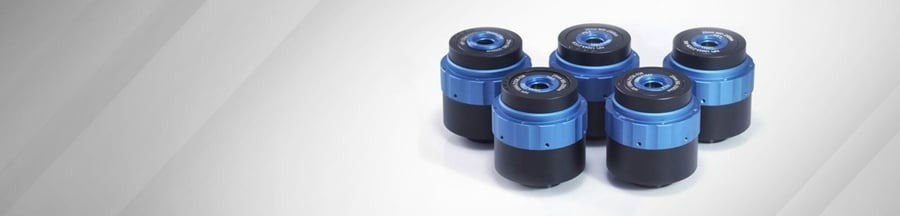
Swir Fixed Focal Length Lens Use in Defense and Security Imaging
- superiorcctvoffpag
- Jan 22
- 4 min read

Defence and security imaging are very important for protecting a nation’s borders, monitoring critical regions, and safeguarding the nation. Rapidly evolving threats require advanced systems that can function in low visibility environments, including in complete darkness, and through fog, and smoke, or dust. One optical solution that has become more and more valuable in this field is the Swir Fixed Focal Length Lens, which enables imaging systems to capture clear and detailed visuals that other cameras often miss.
Short-wave infrared, or SWIR for short, is an optical solution that, when combined with a fixed focal length, enables cameras to see fine details within a given scene that are normally impossible for the human eye to perceive. When combined with fixed focal length, the lens achieves several useful attributes including stable image quality, high accuracy, and consistent reliable performance, which is particularly valuable for defense and security work that requires a high level of operational efficiency.
SWIR Technology in Simple Terms
SWIR imaging can capture images anywhere, and can see during starlight or moonlight. With SWIR, images appear more natural and are more detailed than thermal imaging which only show differences in heat. Smart imaging can detect uniforms, vehicles, the ground, and even buildings. Security teams can identify particular structures and achieve operational efficiency.
A Swir fixed focal length lens has a set field of view and does not zoom. This design may seem limited, but in defense applications, it offers strong advantages. The lens remains optically stable, reduces moving parts, and ensures consistent image quality over long periods.
Why Fixed Focal Length Matters in Defense Imaging
In security and military operations, reliability is more important than flexibility. A Swir Fixed Focal Length Lens ensures that once the system is calibrated, it continues to deliver accurate images without adjustment. This is crucial in surveillance systems installed on borders, towers, vehicles, and unmanned platforms.
Fixed focal lenses are also faster in operation. Since there is no zoom mechanism, the camera captures images instantly without delay. This helps during real-time monitoring and rapid response situations where every second matters.
Key Uses in Defense and Security
One of the primary uses of SWIR fixed focal lenses is border surveillance. These lenses help detect movement across long distances, even in poor visibility. Fog, haze, and low light no longer block vision, allowing forces to monitor large areas continuously.
In military reconnaissance, these lenses are used in airborne and ground-based imaging systems. Drones equipped with SWIR cameras can fly at night and still capture clear visuals of enemy movement or hidden equipment. The fixed focal length ensures sharp focus and stable performance during flight.
Security agencies also use SWIR imaging in coastal monitoring. Reflections from water surfaces often confuse regular cameras, but SWIR lenses reduce glare and improve contrast. This helps detect small boats or suspicious activity along shorelines.
Performance in Low Light and Harsh Conditions
Defense imaging systems must work in all weather and lighting conditions. The Swir Fixed Focal Length Lens performs well in darkness, dust, smoke, and mist. Since SWIR light penetrates atmospheric obstacles better than visible light, images remain clear even when visibility is poor.
These lenses are built using strong optical materials and coatings that withstand extreme temperatures and rough environments. This durability makes them suitable for long-term outdoor deployment without frequent maintenance.
Improved Identification and Accuracy
Accurate identification is critical in defense and security operations. SWIR imaging helps distinguish between materials that appear similar in visible light. For example, camouflage patterns, clothing fabrics, and vehicle coatings reflect SWIR light differently. This allows security teams to identify threats more accurately and reduce false alarms.
A fixed focal length lens maintains consistent resolution across the image. This consistency helps analysts compare images over time and detect changes in monitored areas. It also supports advanced image processing and analytics systems used in modern defense setups.
Integration with Advanced Imaging Systems
Modern defense platforms often use multi-sensor systems that combine visible, thermal, and SWIR cameras. The Swir Fixed Focal Length Lens integrates smoothly into these systems, adding an extra layer of visual intelligence. Together, these sensors provide a complete view of the environment, improving decision-making.
Fixed focal SWIR lenses are commonly used in automated surveillance systems supported by artificial intelligence. Stable image output helps software analyze patterns, track movement, and detect unusual behavior more effectively.
Cost Efficiency and Long-Term Value
While SWIR technology is advanced, fixed focal length lenses help control costs. Their simple design reduces manufacturing complexity and maintenance needs. Fewer moving parts mean lower chances of mechanical failure, which is essential for mission-critical applications.
Over time, these lenses offer strong value due to their long lifespan and consistent performance. Defense agencies benefit from reduced downtime and dependable imaging, which supports continuous security operations.
Applications Beyond the Battlefield
Apart from military use, SWIR fixed focal lenses are widely applied in homeland security, airport surveillance, and critical infrastructure protection. Power plants, data centers, and government facilities rely on advanced imaging to prevent unauthorized access.
Law enforcement agencies also use SWIR imaging for night operations and search missions. The lens helps officers see clearly without visible lighting, reducing risk and improving safety.
Future Role of SWIR Fixed Focal Length Lenses
As defense technology continues to evolve, the demand for precise and reliable imaging will grow. SWIR fixed focal lenses are expected to play a larger role in autonomous systems, smart surveillance networks, and advanced reconnaissance platforms.
Improvements in sensor sensitivity and lens coatings will further enhance image quality. This will allow defense forces to operate more efficiently while maintaining high security standards.
Conclusion
The Swir Fixed Focal Length Lens has become an important component in defense and security imaging systems. Its ability to deliver clear visuals in low light, harsh weather, and complex environments makes it highly valuable. With stable performance, strong durability, and accurate identification capabilities, this lens supports critical missions across land, air, and sea.
As security challenges increase, reliable imaging tools like SWIR fixed focal length lenses will remain essential. They help defense and security teams see beyond limits, respond faster, and protect lives and assets with greater confidence.


Comments